
Call it intuition, but something tells me that it is about time for science to be turned on its head for being wrong. Again.
Recently, published reports from various scientific fields offer new insight about possible ways the human immune system wards off disease, specifically those conditions blamed on viruses, such as AIDS and hepatitis.
For starters, the latest word from atrociously well-funded AIDS researchers is that they’ve discovered the secret to defeating the HI virus by studying elite controllers (ECs), those people who test positive for HIV antibodies but never get sick, at least not according to any of the major AIDS theories.
As virologists, these scientists at MIT ultimately base their research and subsequent findings on assumptions established using the original faulty research of the now-discredited “co-discoverer” of HIV, Robert Gallo. According to them, ECs have a genetic trait that causes them to create “super t-cells” that can defeat HIV and other viruses, such as Hep C.
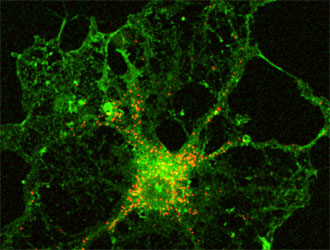
Meanwhile, across town at Children’s Hospital Boston, less well known molecular and cellular biologists are busy performing research that continues to throw cold water on Virology’s notion that t-cells are the key to fighting viral infections in the first place. According to them, organelles inside the cell known as peroxisomes can detect virus invasion signals and launch a limited antiviral offensive. Other organelles, the mitochondria, follow up with a more definitive antiviral counterattack.
Even the headlines for these very different explanations for stopping viral infections tell a story. Virologists are “finding secrets” to “mysterious viruses” while the cellular biologists report “mild-mannered helpers” of the immune system. While mild mannered may not sound nearly so dazzling as secretive and mysterious, this research being conducted at a community hospital sounds exciting.
What is a poor layperson like myself to think of these very different explanations for how our immune systems work? I may be out of my league to try to analyze these kinds of research reports too finely, but it shouldn’t take a rocket scientist (or a virologist or a molecular biologist) to realize that “Science” has not conclusively defined the process by which these supposedly lethal viruses kill.
Add this new information to the huge questions of what viruses actually are, where they come from and what they do, as articulated by Janine Roberts in her book Fear of the Invisible, for example, and the basis for skepticism grows exponentially. Roberts reports on the body of research conducted by cellular biologists purporting that at least some viruses—retroviruses, in particular—may actually be cellular messengers that are manufactured by our body’s cell. These are called endogenous viruses and every human being is chock full of them for good reasons.
Reading these various accounts of what is going on in the world of Science recently has led me to think that we just might soon be reading about a significant and newsworthy breakthrough very soon. I hope that isn’t just my personal optimism working overtime.
I also read the tea leaves of published accounts by the AIDS industry and it appears that they, too, see the writing on the wall of the demise of the ‘HIV=AIDS, unless you take the expensive and toxic drugs for the rest of your life’ meme.
The line between the terms “HIV” and “AIDS” have been blurred since the beginning of the epidemic, resulting in lengthy and convoluted treatises that attempt to explain how AIDS is not a disease, but rather a syndrome of diseases, yet the treatment of choice is one-size-fits-all. More recently, AIDS is becoming even more blurred as public health policy makers (and grant seekers) now lump it in with malaria, tuberculosis and other viral diseases like hepatitis. This appears to me to be a rather transparent attempt to keep funding within the AIDS establishment, rather than refocusing the commitment to fight long standing epidemics of actual diseases that can be cured and prevented without drugs.
I’m going to go out on a limb and predict that the work of cellular biologists will soon result in a new way of viewing illness from diseases like these in the very near future. This new view will hopefully be heeded and will result in a shift of our scarce public funding resources from “fighting sneaky viruses” to working to eliminate the common contributing factors of malnutrition, poverty, lack of sanitation and clean water and drug abuse.
Then again, maybe what I’m feeling is simply optimism, rather than intuition.


This study is a major discovery for children with Peroxisome Biogenesis Disorders and the fact that now researchers and clinicians may know they are not developmental and metabolic disorders. Anything related to HIV is secondary. Why? Because this study only sheds more light on how the body responds to foreign invaders such as virus and bacteria via the signaling pathways. The signaling pathways discussed in this study are specific to the cytosol of the cell (where the organelles are located) and transmitting the signal across the lipid bilayer. This study in NO WAY diminishes what we know about Innate Immunity overall. This study in NO WAY diminishes what we know about Adaptive Immunity. From your comment, “virology’s notion that t-cells are the key to fighting viral infections in the first place”, perhaps you should study the difference between the two.
I have further discussed it here:
http://dissidents4dumbees.blogspot.com/2010/05/jonathan-barnett-carnac-magnificent.html
JTD
How is it that me commenting at your blog and NOT citing your blog at mine when I critique your lies are related? Why would you think the two are mutually exclusive?
You miss the point, just as you misunderstand the science you quote. I have also proven time and again that you are NOT intelligent. At least not in understanding nor explaining the science of HIV. However, I never said you have no influence. Unfortunately your wildly misrepresentation of HIV science may indeed influence people. And that kind of influence directly impacts their health in a negative way. To that end, why do you ignore that fact that your analysis of the Peroxisome Study was way off base? Very convenient how you ignore that. Very convenient of you to not post my comment there for your readers to see the truth and the real point of the study, which again, you did not understand and misrepresented.
Face it, Jonathan, I do have credibility and you do not. I do not lie. You do.
You work for the IRS and you may influence over who gets audited. Is it just conincidence? Your loud, screaming denial says it all. While my refund has been temporarily delayed, it is just that; a delay. Of course I do not live paycheck to paycheck so a delay of a few thousand dollars does not make a big impact on me. To me, it is just moeny in savings.
Face it, Joanathan, you are no match for my logic and intelligence.
JTD
This comment was originally held for moderation because it is off-topic, inaccurate and ridiculous.
Because of your incessant whining, I’ve decided to post it for all to see, against my better judgment because you are mistaken about my employment with the IRS.
I will not comment further here, as it speaks for itself.
All of your pertinent comments have been posted, Todd, despite the name calling, which is normally not allowed on my blog. I do want my readers to see you in all of your spectacular glory.
Your last two comments are too wildly off-topic and/or libelous for me to post. Knowingly making or publishing false statements about people is illegal you know, as well as unethical. I have to draw the line somewhere and I will exercise responsible editorial standards on my blog because ultimately I am responsible for all content here.
Nice deflection, Jonathan. Why is it that you are not specifically addressing the errors I point out?
Is it that you can not admit to yourself or others that you do not understand this topic? That would be to human of you, huh?
JTD
You wrote: “Anything related to HIV is secondary.” So we agree. Primary or secondary… it IS related.
Thanks.
You state that “you will not comment further here, as it speaks for itself”. That is just more deflection from the fact that you can not engage me in a real debate.
Yes, my words do “speak for themselves”. I shredded your thoughts on the Peroxisome Study and you chose NOT to defend your obvious lies and misrepresentation for obvious reasons. You can not defend against the truth.
I win again.
Yes Todd. You win. Will you go away now?